Overhead to Underground Conversion Blue Mountains
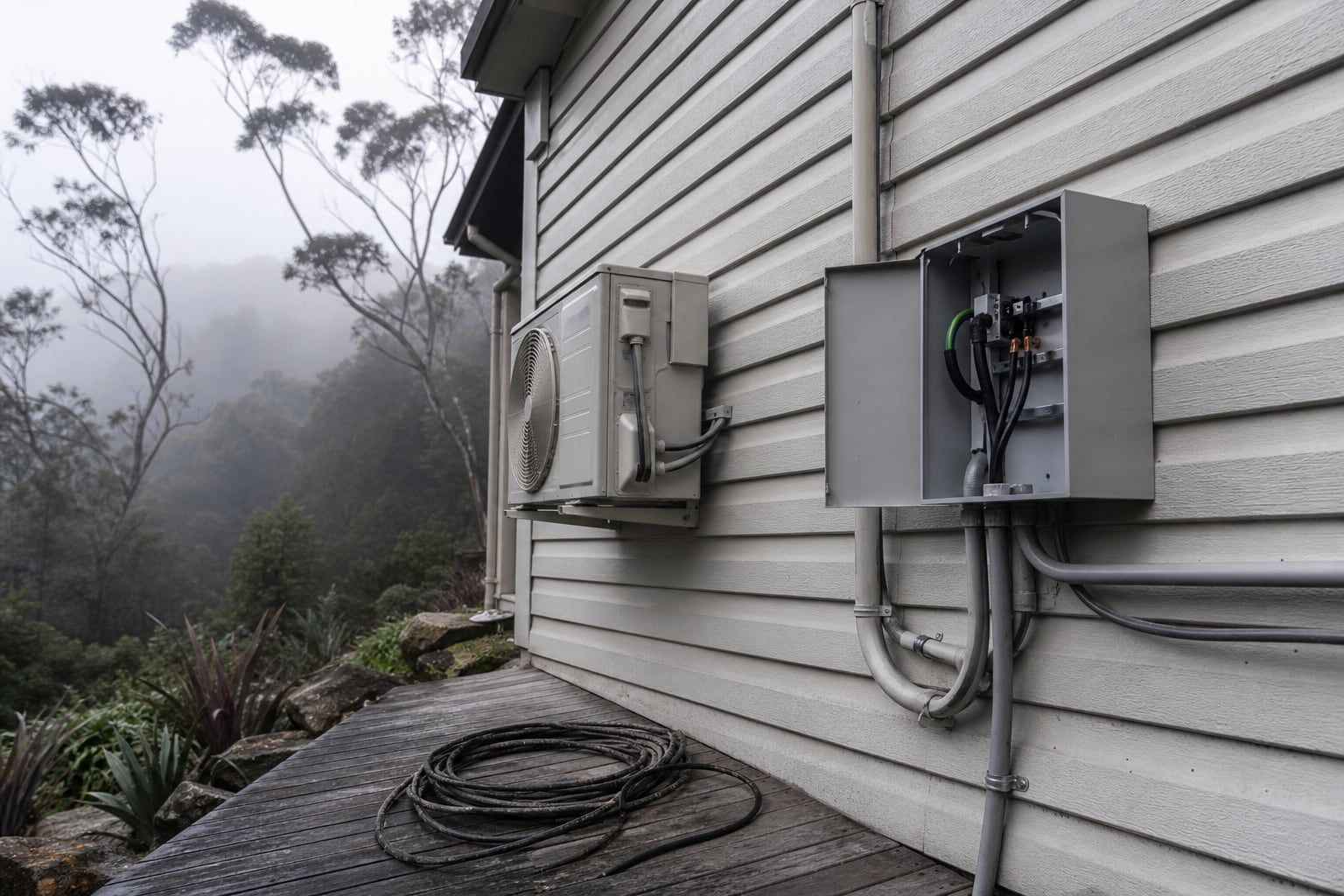
Take the line out of the gums and out of the fire, with a cable in the ground from the network to your meter board.
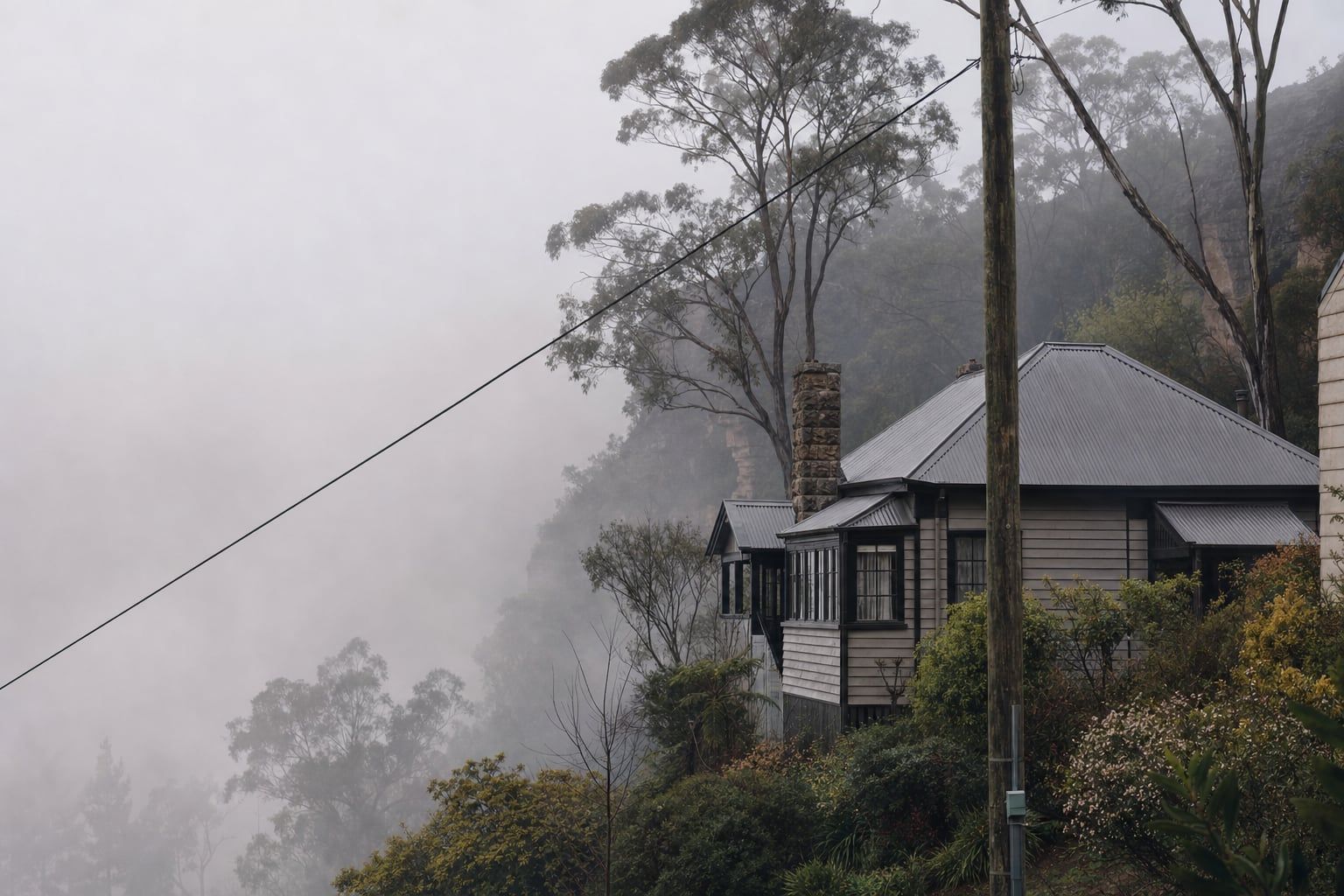
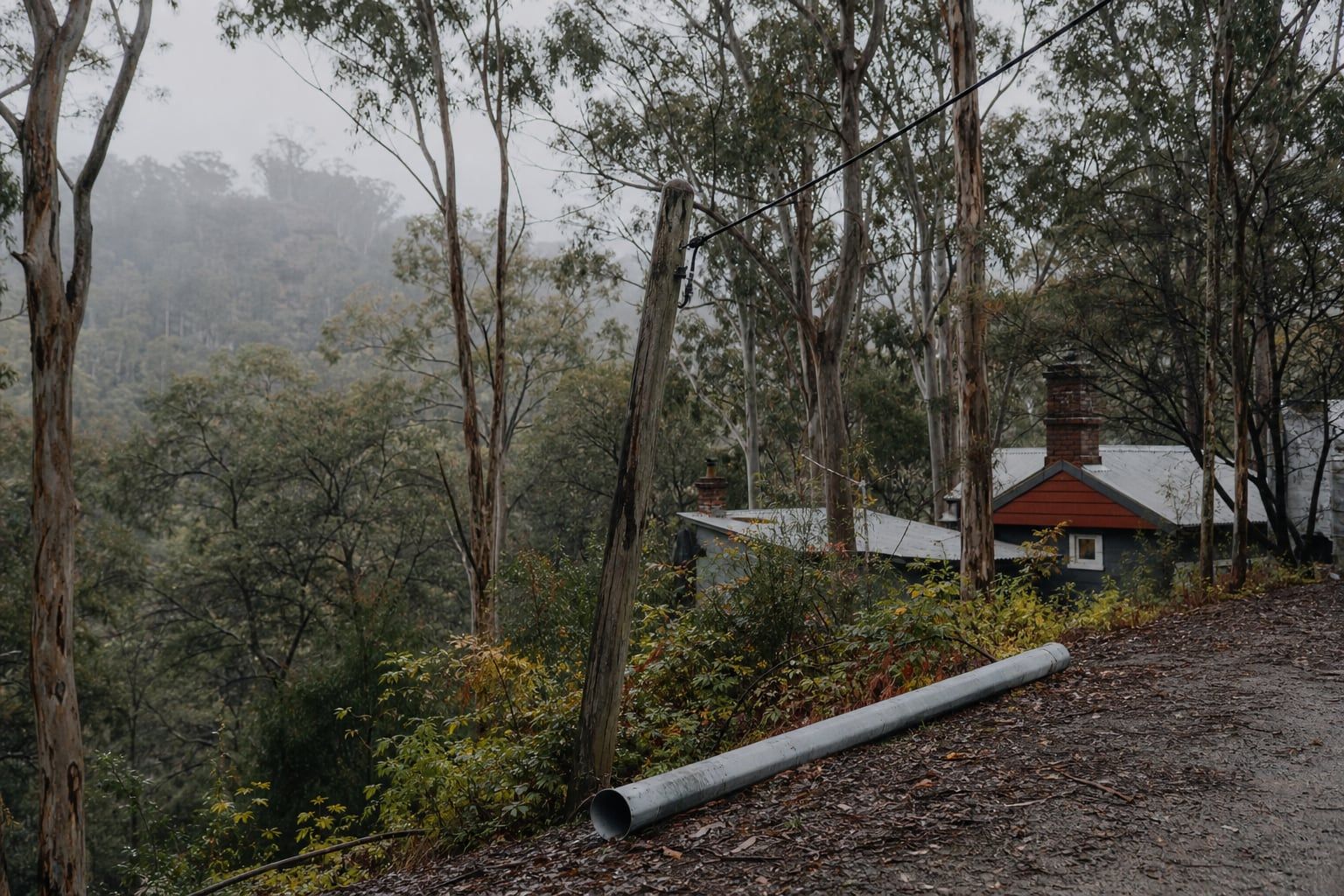
Across the Blue Mountains, most homes get their power through overhead lines, and a lot of those lines run through trees. A street pole on a narrow road, a service line across a steep front garden, and often a private pole and private line further down the block. In storms they come down; in fire weather they’re a worry; and every year the gums grow closer. An overhead to underground conversion replaces the overhead run with a cable in conduit under the ground, from the network connection to your meter board.
Why Mountains owners go underground
- Bushfire. Overhead private lines through vegetation are a fire risk if they clash, sag into trees or come down.
- Storms and snow. Wind, falling limbs and occasional heavy snow in the upper Mountains bring lines down.
- Maintenance. No more trimming around lines or inspecting ageing private poles.
- Rebuilds. Homes rebuilt after fire, or replaced on bush blocks, often go underground from the start.
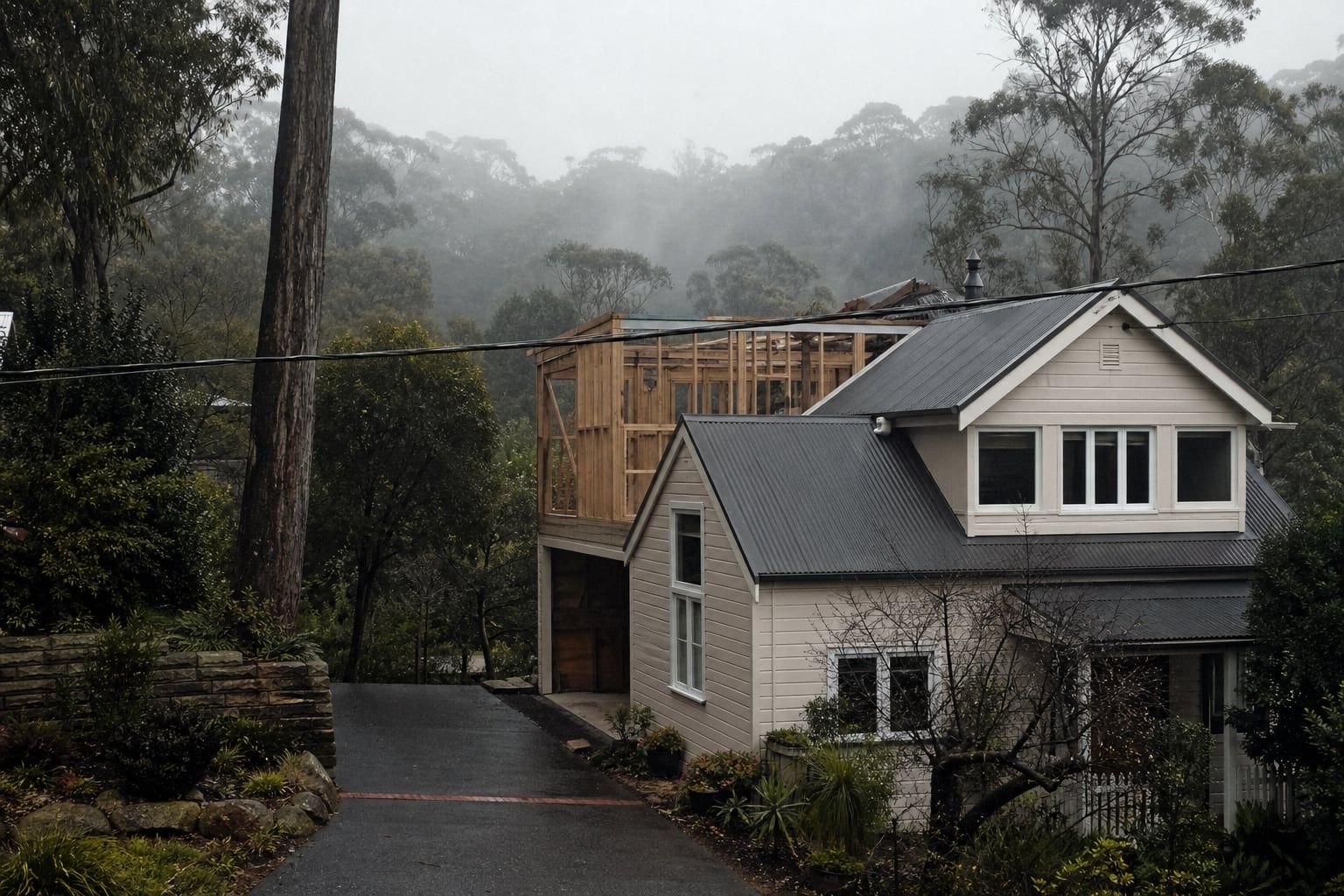
- Renovations. Second storeys, decks and new roofs clash with overhead lines.
How the connection works
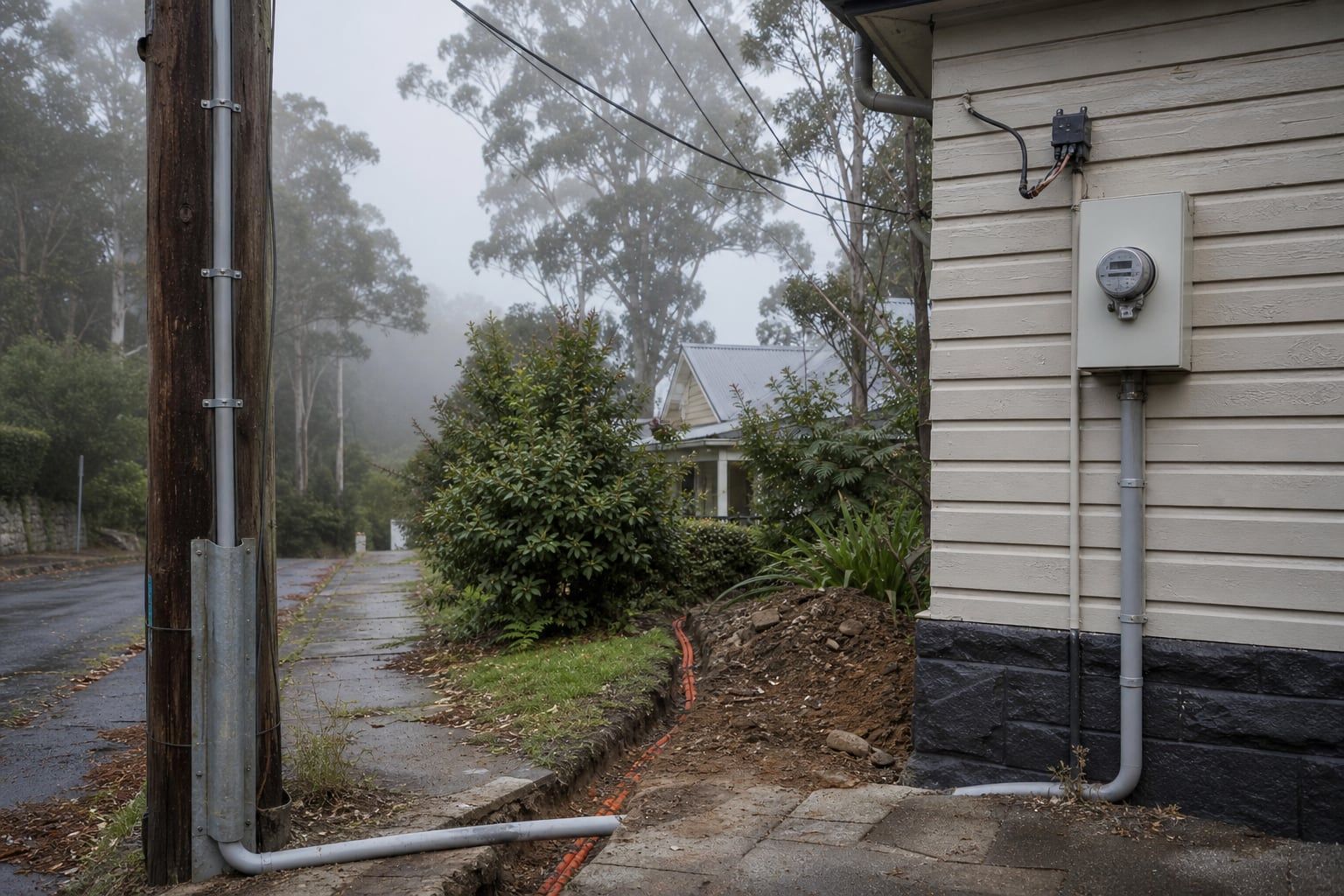
In most Mountains streets, the network is overhead on poles. The usual method is to run the new cable to the base of the nearest suitable Endeavour Energy pole and up it in a protective conduit to the mains. Some newer subdivisions have underground mains with a pit at the boundary. On properties with a private pole, the connection point may be that pole, and the underground run starts there. We confirm the method with Endeavour Energy before quoting.
Digging in the Mountains
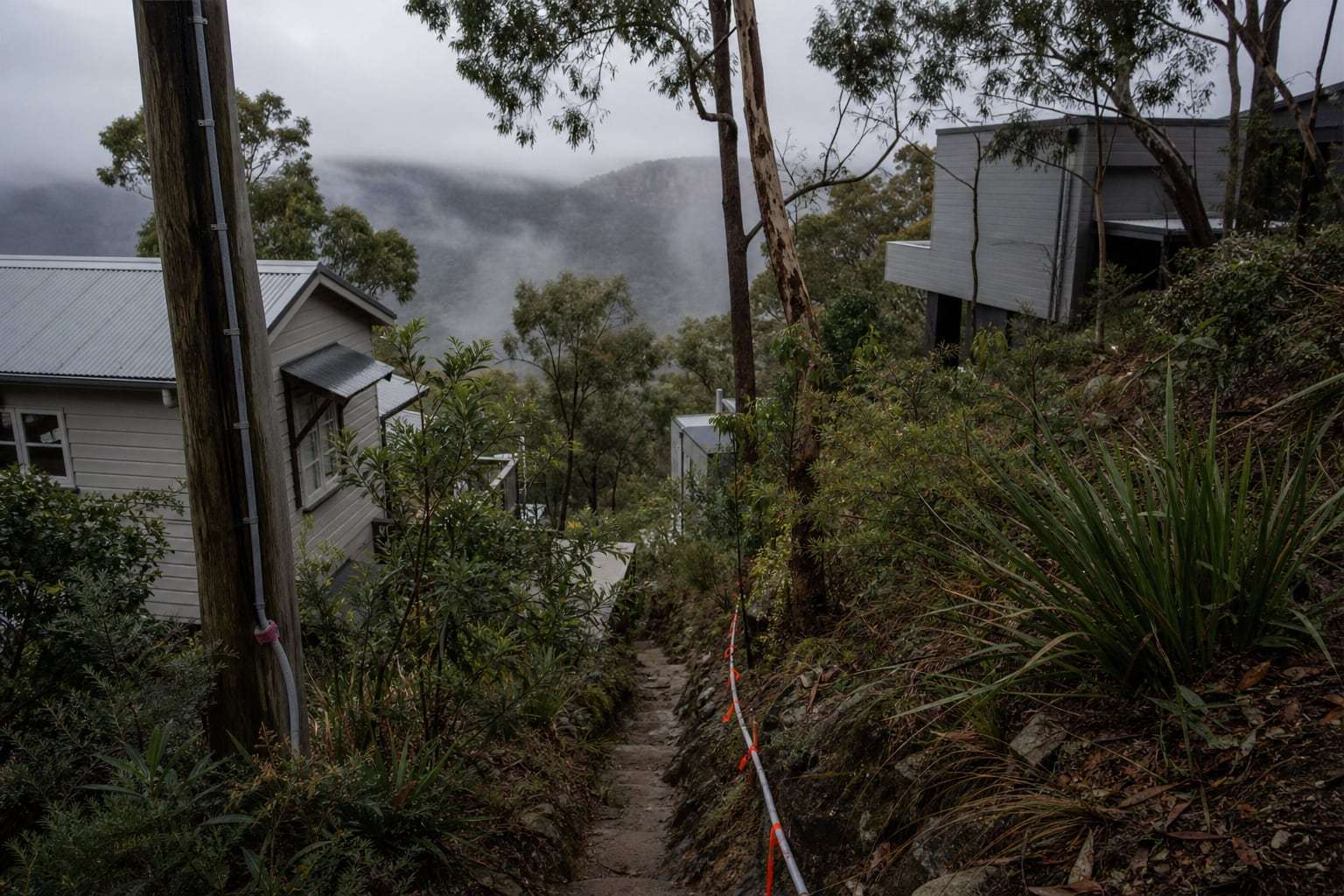
Mountains ground is rarely easy. Sandstone sits close to the surface, blocks are steep, and many driveways and paths are built on retaining walls and stairs. Tree roots are everywhere. We plan the route to avoid rock where possible, cut it where we can’t, hand dig near roots and walls, and keep the trench as short as the site allows. Conduit goes in at the required depth with marker tape above it.
While the trench is open, size the cable for the future: a three phase power upgrade or a bigger single phase cable costs little extra at this stage.
Connection day
We lodge the notification with Endeavour Energy, isolate, pull through and terminate the new cable, test and restore power. Then the old overhead line, bracket and any private power poles are removed. You get a certificate of compliance.
Rebuilds after fire
Where a home is being rebuilt on a fire-affected block, plan the underground supply with the builder from the start. Site power during the build comes from a temporary builders supply.
Getting the trees right
Undergrounding removes the private overhead line from your trees, but trees on your property still need to be kept clear of Endeavour Energy’s service line from the street, if any part of it remains overhead. We’ll explain what changes and what doesn’t.
How long it takes
Short runs take a day of trenching plus a connection visit. Long bush runs and rock take longer and are staged so you keep power until connection day.
Get a quote
Call the Blue Mountains level 2 electrician team to walk the route and get a fixed written price. We’ve taken a lot of supplies underground on steep blocks in level 2 electrician Wentworth Falls and Leura.
Updated
What good overhead to underground conversion looks like
Overhead to Underground Conversion across Blue Mountains
Overhead to Underground Conversion in Blue Mountains: step by step
- Plan the routeWe walk the block from the connection point to the meter board, around rock, trees, stairs and tanks.
- Confirm the connectionWe check with Endeavour Energy how and where the underground cable connects.
- Trench and conduitHand and machine digging as the ground allows; conduit at depth with marker tape.
- Connect and clearNew supply connected and tested; old overhead line and private poles removed.
Overhead to Underground Conversion guides for Blue Mountains homeowners
- Bushfire safety for power lines on Blue Mountains properties: what owners can do before summerHow overhead lines and private poles can contribute to fire risk, what owners are responsible for, and a pre-summer checklist for Mountains homes.
- Trees near power lines in the Blue Mountains: who trims what, and how to do it safelyWho is responsible for trees near street lines, service lines and private lines, why it matters, and the safe way to get trees cleared.
Overhead to Underground Conversion questions in Blue Mountains
Something else on your mind? Call 02 9158 9989 and ask.
Our block is mostly sandstone. Is underground still possible?
Usually. Rock means saw-cutting or hand work and a carefully chosen route, which raises the cost. We price it after seeing the site.
Will going underground help with bushfire risk?
It removes your overhead private line and poles, which can be a source of ignition or damage in a fire. It doesn't change the street network.
How long is the power off?
Only on connection day, for a few hours. The trench and conduit go in beforehand.