Bushfire safety for power lines on Blue Mountains properties: what owners can do before summer
How overhead lines and private poles can contribute to fire risk, what owners are responsible for, and a pre-summer checklist for Mountains homes.
Almost all of the Blue Mountains is bushfire-prone land, and many homes sit right against the bush. Power lines are part of that picture. Overhead lines that clash in strong wind, sag into branches or come down in a storm can start fires, and lines and poles damaged by fire can leave homes without power or create hazards for firefighters and residents. This guide covers what Mountains property owners can do before summer.
Who’s responsible for what
Endeavour Energy owns and maintains the network in the street and the service connection to your property, and manages vegetation near its lines.
You, the owner, are responsible for everything on your side of the connection point: any private poles, the fittings on them, private overhead lines and underground cables, your point of attachment and mains. You’re also responsible for keeping trees on your property clear of your private lines.
Where private lines cross property boundaries, responsibility can be shared with neighbours.
Why private lines matter for fire
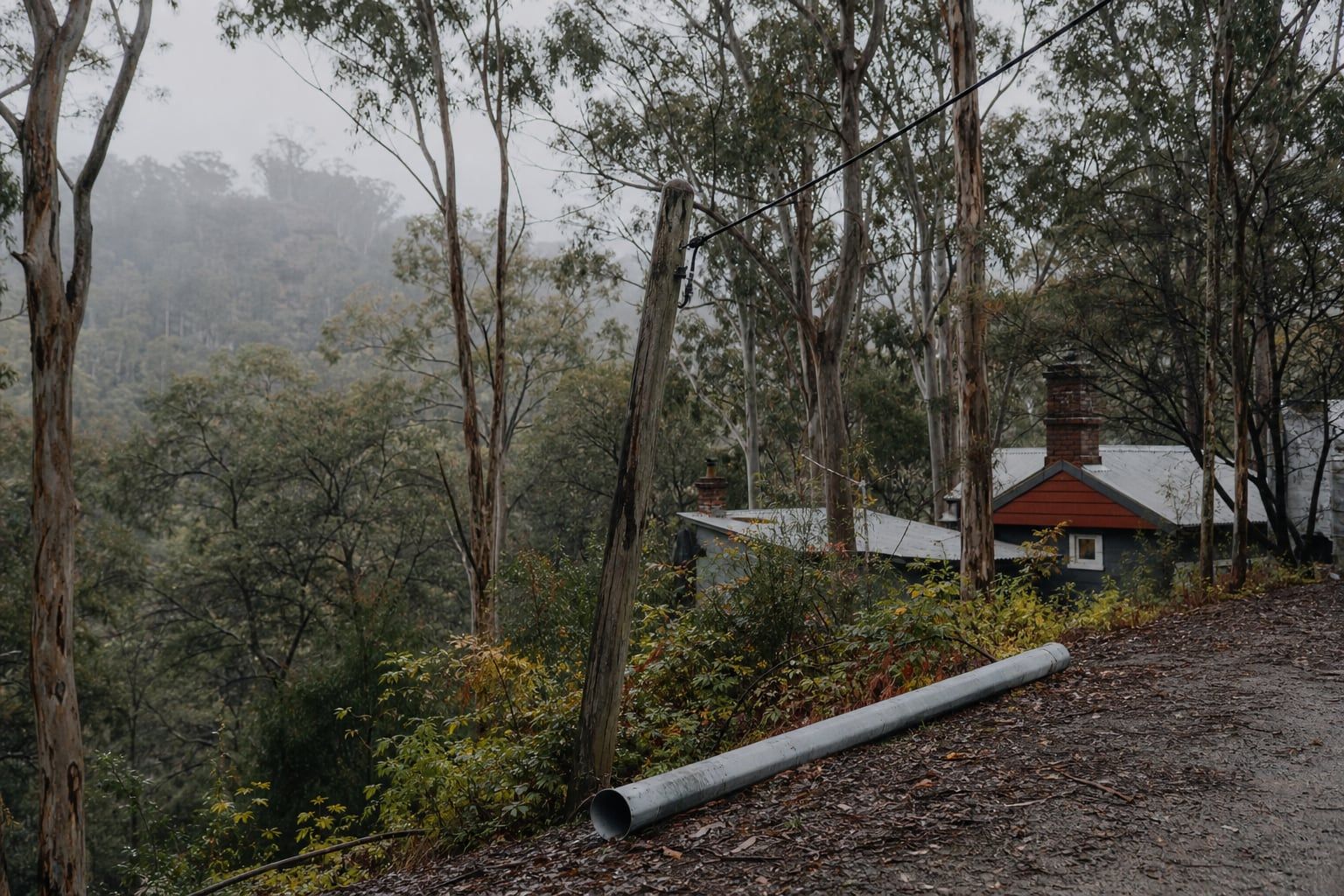
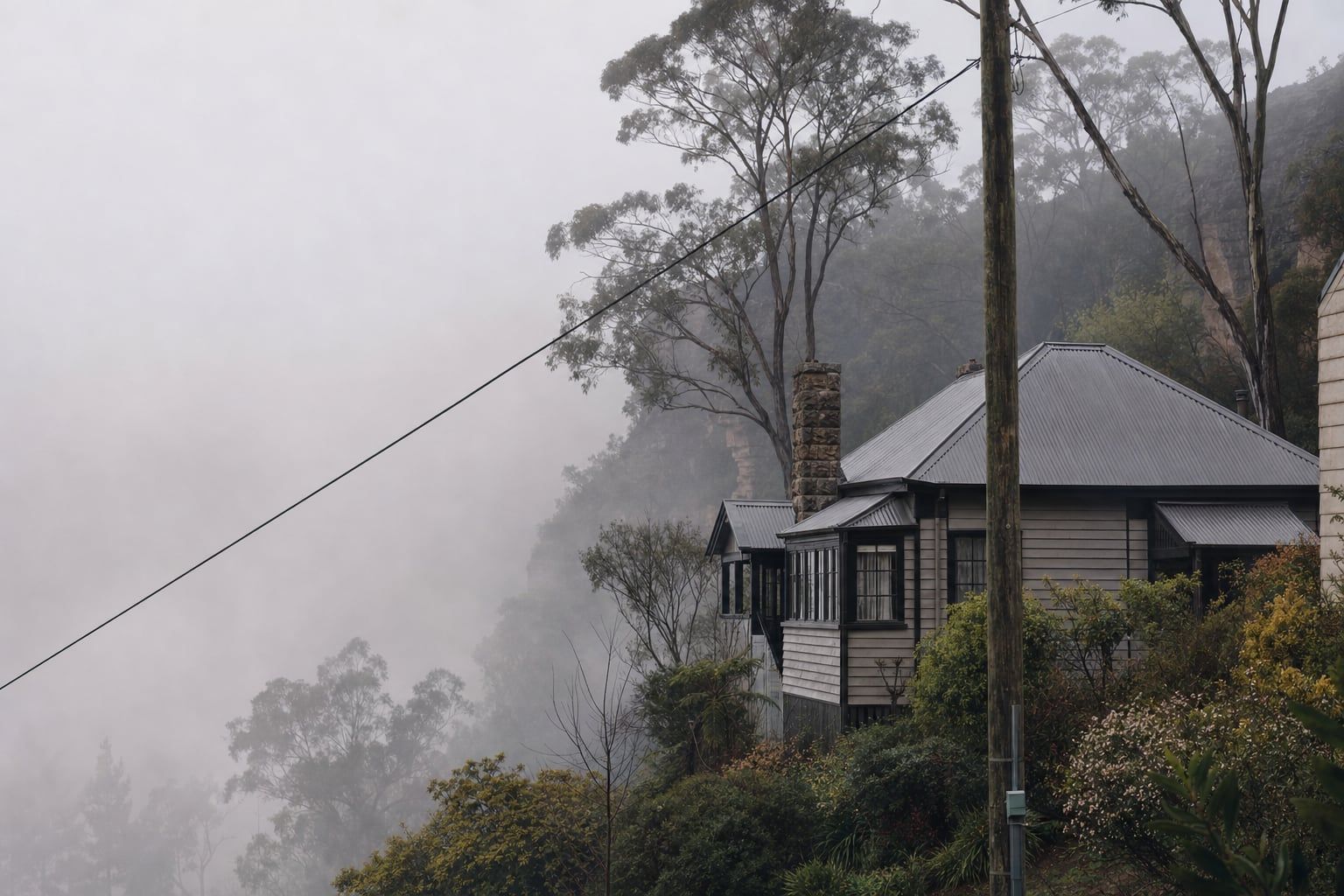
Private lines on Mountains properties often run through tall gums for long distances, sometimes down steep slopes with no easy access. Common risks include:
- Vegetation contact. Branches touching or brushing lines in wind.
- Clashing conductors. Slack spans swinging together in strong winds and throwing sparks.
- Failing hardware. Cracked crossarms, broken insulators and corroded fittings.
- Rotten poles. Timber decaying at ground level until the pole falls.
In bushfire-prone areas, networks inspect private poles and lines and issue notices to owners when they find these issues. Acting before you get a notice, and before summer, is the better approach.
A pre-summer checklist
Walk your property in late winter or spring and check:
- Poles. Any lean? Soft, cracked or hollow timber at the base? Termite mud? Fungus?
- Crossarms and insulators. Cracks, splits or broken pieces visible from the ground?
- Spans. Lines sagging lower than before, or close to each other?
- Vegetation. Branches touching, overhanging or growing toward the lines? Shrubs or leaf litter piled around pole bases?
- Point of attachment. Is the raiser or bracket on the house straight and secure?
- Meter box. Door closing properly, no scorch marks or water inside?
- Numbers. Endeavour Energy’s 131 003 and our 24/7 number saved in your phone.
Don’t climb poles or touch lines. If something looks wrong, call us for an inspection.
Vegetation clearance
Keep trees and shrubs on your property clear of your private lines. How much clearance is needed depends on the line type and voltage. Because work close to live lines is dangerous, an arborist will usually need the line isolated first. We can arrange a power disconnection and reconnection for the tree work.
If the same trees need trimming every year, it may be cheaper to move the line or pole away from them, or go underground.
Fixing poles and lines
Our private power pole replacement service covers:
- Replacing rotten timber poles with new timber or galvanised steel
- Replacing crossarms, insulators and fittings
- Re-tensioning or replacing sagging spans
- Re-routing lines away from tree canopy
Steel poles don’t rot, attract termites or burn, which suits bush blocks.
Undergrounding
An overhead to underground conversion replaces your overhead private line and poles with cable in conduit. It removes the line as a possible ignition source, removes the need for vegetation clearance around it, and protects your supply from falling trees and fire. On rocky, steep Mountains blocks it takes planning, but for many owners it’s the best long-term investment.
During a fire
Follow the advice of the NSW Rural Fire Service and emergency services. Stay well away from fallen lines and damaged poles. Don’t try to restore power or reset anything until the supply has been checked.
After a fire
Fire-affected supplies need inspection before they’re relied on again. Poles may be burnt at the base, lines may be damaged, and meter boxes may have been exposed to heat. We make the supply side safe, assess the damage and plan repairs or a rebuild supply.
Studios, sheds and second dwellings
Many Mountains properties have a studio, shed, workshop or second dwelling supplied by a separate private line from the house. Those lines and any poles carrying them need the same attention, and they’re often the most neglected part of the property’s supply.
Get ready this season
Call the Blue Mountains level 2 electrician team for a pre-summer inspection of your private poles and lines. Our guide to trees near power lines has more on vegetation.
Updated
Bushfire safety for power lines on Blue Mountains properties: common questions
Something else on your mind? Call 02 9158 9989 and ask.
Do we need to do anything if we only have a line from the street to the house?
Keep trees on your property clear of it where you're responsible, and check your raiser or bracket is sound. The street network and the service line are generally the network's responsibility, but report any trees or damage you notice.
Can I trim branches near the line myself?
Not close to the line. Work near live overhead lines needs qualified people and usually an isolation. We can isolate the line so an arborist can work safely.
Does undergrounding make my house fire-proof?
No. It removes your private overhead line as a possible ignition source and stops it being damaged in a fire, but it's one part of a wider bushfire plan.